
"How was your sprint?" Gene asked.
"Incredible, actually." I leaned back a little. "I picked up five tasks and finished all of them. Then I grabbed something from the backlog, and I'm almost done with that too."
"How's Kevin doing?"
"Oh, you know Kevin." I shrugged. "He picked up three things, and he's still on the second one. Every day this week, he's said he's almost done. I don't think he's going to finish it, let alone start the next one."
Gene paused.
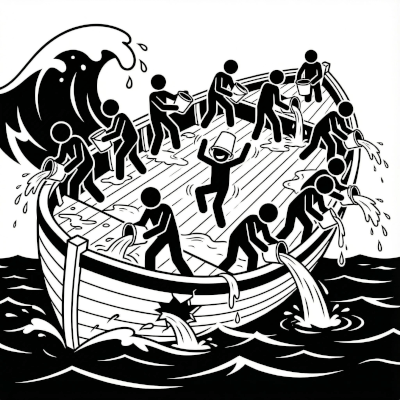
"Do you think the sprint is more helped by you picking up backlog items, or by you helping Kevin?"
Oh.
It had never occurred to me to help Kevin. I quite liked getting more tasks done than him. A sprint, to me, was a competition between engineers: who could close the most tickets? I had never thought of it as a collective goal, or that helping a teammate might matter more than padding my own count.
To be honest, I had never really thought about sprints at all. I didn't know why they were called sprints. I figured it was just some arbitrary bucket of tasks, and everyone fended for themselves. You did your own work unless you had the terrible chore of reviewing someone else's PR.
I knew we were doing "Agile" or "Scrum" or "Kanban," or something. I had just never considered what any of it actually meant. It reminded me of how, somewhere in the last 25 years, project managers got renamed product managers, and I'd assumed they were the same thing.
I'm not someone who needs praise. Maybe I secretly want to be admired, but I'd want the admiration itself to be a secret. Let me do my thing. Still, even mildly critical feedback from a manager stung, especially when it was right.
Gene probably didn't think much about that exchange afterward. But that day, I went home and started reading. The history of Agile. The reasoning behind sprints. What "done" was supposed to mean. I'd been operating on a pile of assumptions I'd made up myself, and almost all of them were wrong.
That's the kind of thing this field guide is about: what you need to know but won't, because no one teaches it in school. Someone just has to tell you. Thanks, Gene.